A Little Piece of Portugal on the Road
How It All Began – The Idea

The idea for this project came to me at home in Portugal, the country I now call home. I wanted to make my own contribution to this year's European N Scale Convention (ENSC) in Stuttgart. However, transporting larger modules from Portugal to Germany involves considerable logistical effort, so one thing quickly became clear: I needed to build a small module that would fit easily into an ordinary suitcase.
At the same time, I wanted visitors to recognise immediately where the module came from. Using the Portuguese national flag as a backdrop was therefore an obvious choice. I also came up with the idea of featuring some well-known Portuguese landmarks that visitors might recognise from their own travels.
However, reproducing these landmarks accurately to scale was out of the question, both because of the space required and the considerable amount of work involved. Instead, I wanted to create more stylised representations.
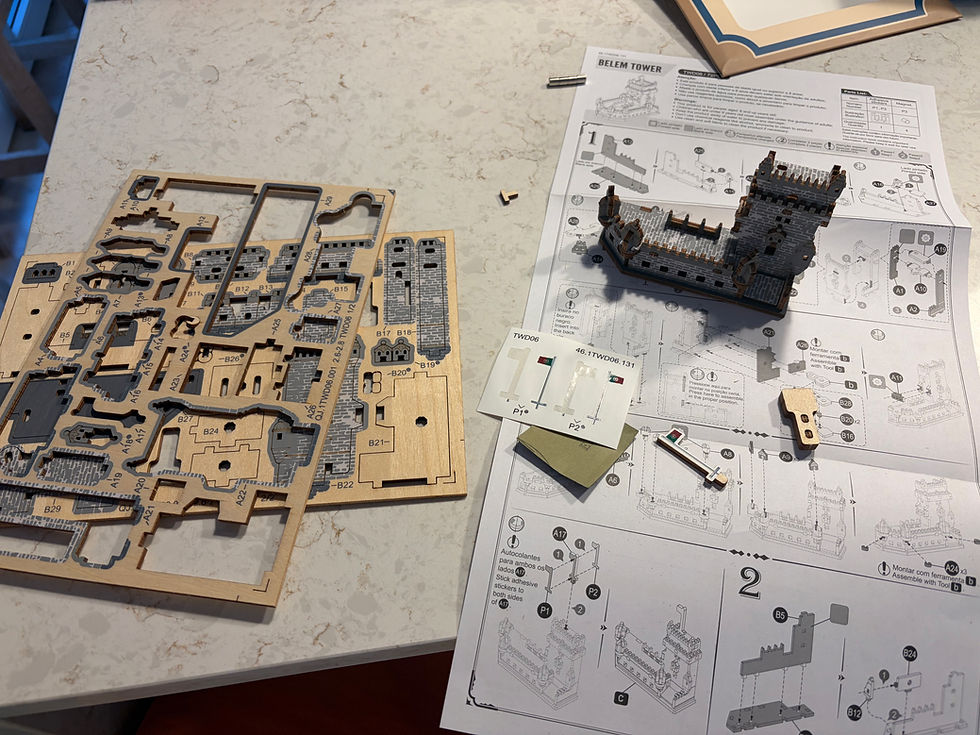
I already had a laser-cut wooden kit of the Torre de Belém from a Portuguese manufacturer at home. To complement it, I bought two more kits from the same manufacturer: the famous Lisbon tram and the colourful Galo de Barcelos (Rooster of Barcelos).
And with that, the foundations for my little piece of Portugal were in place – compact, easy to transport and with an unmistakably Portuguese character.

From Souvenir to T-Track Module
Assembling the three landmarks was surprisingly easy. Since all the individual pieces were already precisely laser-cut, there was no need for any sawing or cutting. The pieces simply slot together following the assembly instructions – no glue required!
The real challenge was finding a way to present the landmarks at their best. My idea was to create a small stage for each one: a raised platform with a suitable photographic backdrop.
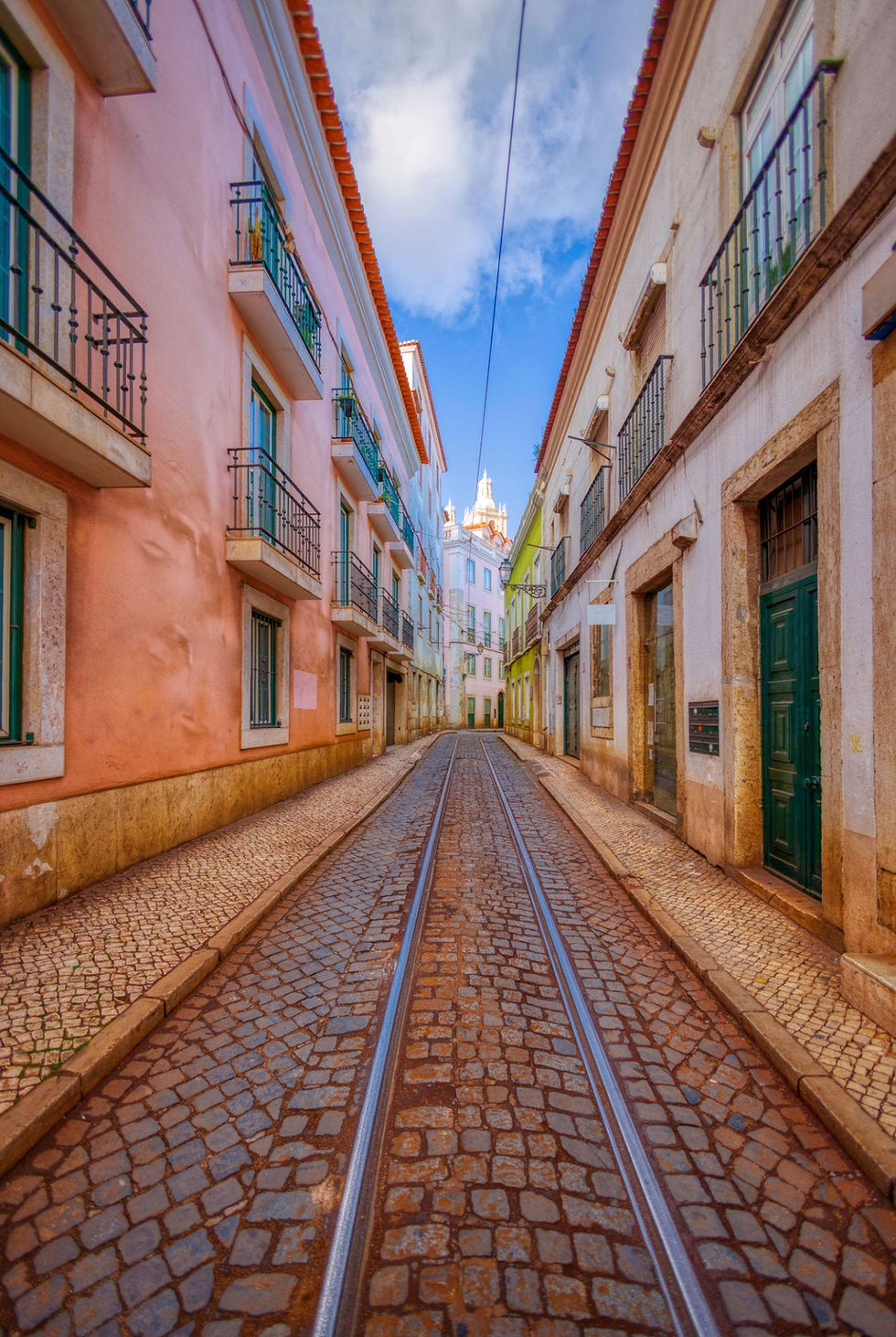
For the Torre de Belém, I chose a view from the tower across the River Tagus towards the 25 de Abril Bridge. The Lisbon tram received a typical old-town street scene as its backdrop. To make the scene look a little more realistic, I even added a short section of tram tracks to the platform.
For the Galo de Barcelos, I decided on a spot right at the front edge of the module, where the colourful rooster immediately catches the eye.
And so, each of the three landmarks found its own special place on my little Portugal module.

The Inspiration – Three Iconic Symbols of Portugal
Torre de Belém – The Iconic Landmark on the Tagus

The Torre de Belém was built between 1514 and 1520 on the banks of the River Tagus in Lisbon. Originally part of the city's defensive fortifications, it is now considered one of the finest examples of Manueline architecture. The tower has been a UNESCO World Heritage Site since 1983. It recalls the golden age of Portuguese seafaring and exploration and is now one of Lisbon's most visited attractions.
Tram 28 – A Journey Through Lisbon

The famous yellow tram on route 28 is one of Lisbon's most iconic symbols. Its historic carriages wind their way through narrow streets, steep hills and picturesque neighbourhoods such as Graça, Alfama and Estrela. The tight bends and sometimes remarkably steep gradients make the journey particularly fascinating. While it is a popular attraction for tourists, the tram remains an important part of everyday public transport for many local residents.
Galo de Barcelos – The Portuguese Lucky Rooster

The colourful Galo de Barcelos (Rooster of Barcelos) is one of Portugal's most recognisable symbols. Its story goes back to an old legend: A pilgrim who had been unjustly sentenced to death insisted on his innocence and predicted that a roasted rooster on the judge's table would crow. When this miracle actually happened, the pilgrim was saved. Today, the rooster symbolises good luck, justice and Portuguese tradition, and can be found in souvenir shops throughout the country.